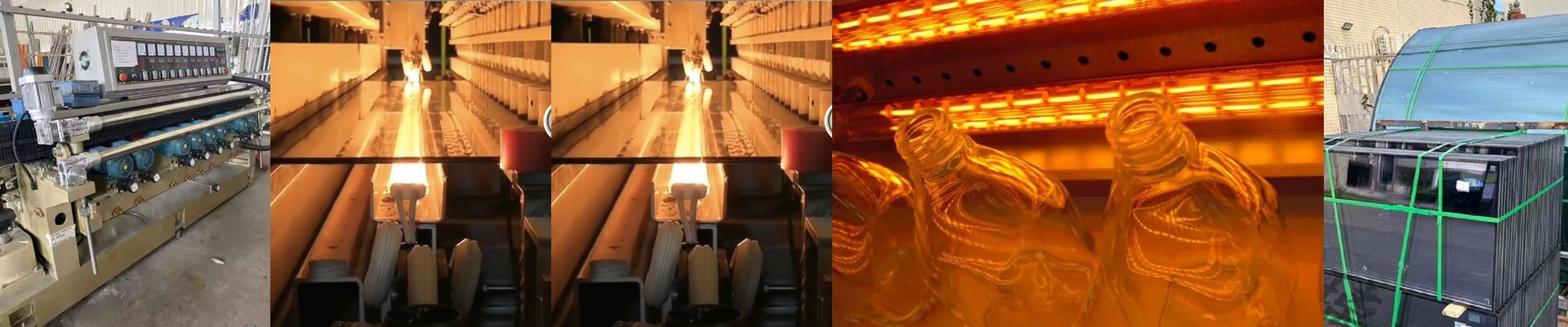


On the floor, annealing is where stress goes to hide. If the lehr can’t hold a tight, repeatable temperature profile, you end up with warp, optical distortion, and thermal stress that shows up later as breakage. That’s scrap, rework, and overtime.
What matters under the hood
We spec the annealing lehr lamp with short-wave infrared (SWIR) quartz elements because they respond fast and hold control tight. You get a uniform thermal field across the ribbon—fewer hot spots, fewer cold edges. Setpoints stay stable, recovery after door openings is quick, and heating stays consistent even at line speeds where soak time is short. The lamp body is built for industrial duty, with high-temperature insulation and an electrical interface that lines up with standard lehr busbars and terminal boxes.
Why this matters in practice
In glass processing, yield is the scoreboard. This lamp keeps the annealing curve steady, so you spend less time chasing temperature swings and more time shipping good glass. Energy use drops because SWIR delivers heat straight to the glass with low convection loss, and the fast ramp-down cuts idle power. Fewer thermal cycles mean less wear on the system—lower maintenance and fewer unplanned changeouts.
The details that keep it working
This is a direct-fit replacement for many OEM lehr zones, but lehrs aren’t all the same. Before ordering, confirm mounting footprint, lead length, terminal type, and control method (analog or PID) to match your existing zone wiring.Keep the reflector geometry and airflow intact—clean, aligned—and you’ll get the uniformity and repeatability the lamp is designed to deliver.